

“Long Read ONT” Sequencing
The sequencing technology developed by ONT (Oxford Nanopore Technologies) is based on measuring variations in an ionic current as a single molecule (DNA or RNA) passes through a biological nanopore embedded in a synthetic membrane.
This nanopore acts as a sensor: the electrophysiological disturbances generated as the strand passes through are translated into a nucleotide sequence using base-calling algorithms based on deep learning (neural networks).
This approach enables the generation of very long reads (ranging from a few kilobases to several megabases for ‘ultra-long’ reads), whilst overcoming biases linked to base composition (GC-rich regions, repetitive sequences).
Furthermore, the continuous improvement in the accuracy of the metrics now enables single-read accuracy rates of over 99 per cent to be achieved, rivalling short-read technologies directly whilst retaining the ability to:
• Perform de novo sequencing with full assembly (e.g. telomere-to-telomere genomes).
• Detect structural variants and complex rearrangements.
• Directly characterise epigenetic modifications (e.g. 5mC, 6mA) and native RNA without PCR or reverse transcription steps (Direct RNA-seq).
Library preparation and extraction
To maximise the generation of very long reads (> 100 kb to > 1 Mb), the extraction of ultra-high molecular weight (uhHMW) DNA is essential.
Library preparation is tailored to the specific application objectives:
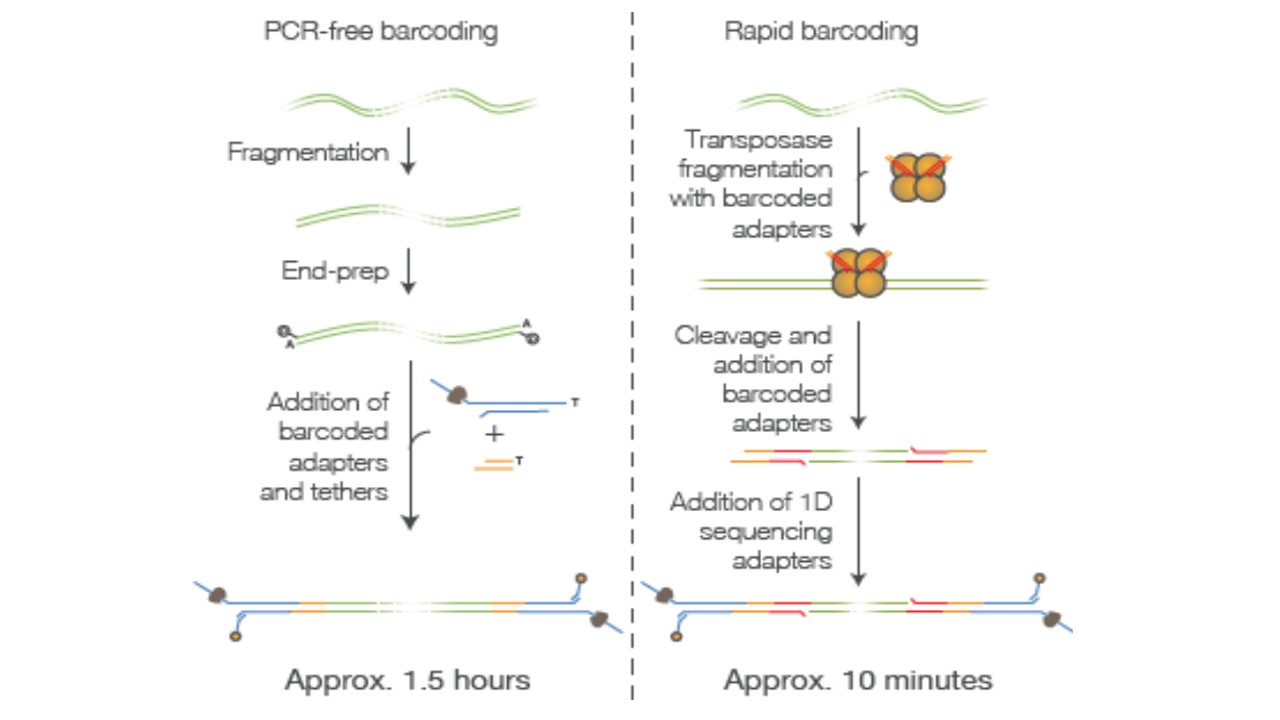
• With fragmentation: mechanical or enzymatic (transposase) to adjust fragment size and control throughput.
• Without fragmentation (Ultra-Long): maximum preservation of DNA integrity.
The DNA or RNA fragments are ligated to specific adaptors associated with an enzymatic motor complex (helicase), which regulates the rate of translocation through the pore, as well as to a ‘tether’ sequence that facilitates the transport of molecules to the pore entrance.

Platforms to contact for this area of expertise
Updated Aug 2026