

Short-Read Sequencing
Via Cluster Generation and SBS Chemistry
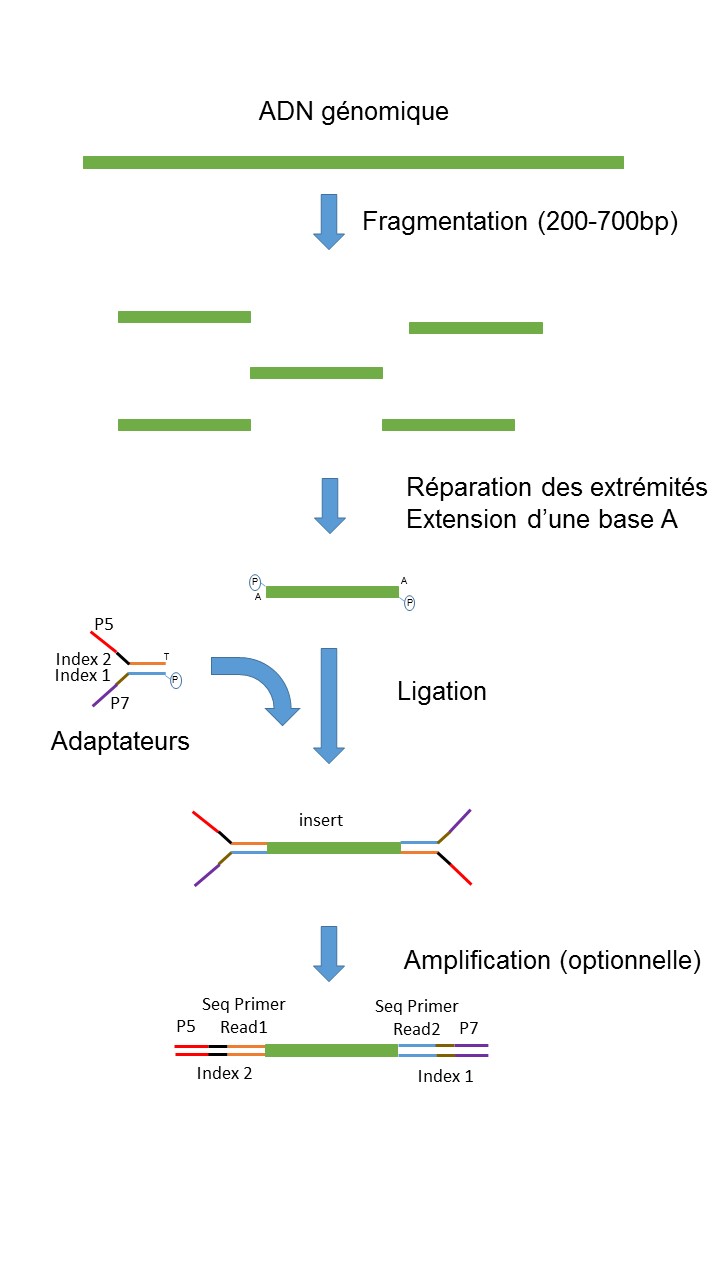
Library preparation for paired-end sequencing, popularized by Illumina, involves fragmenting genomic DNA mechanically or enzymatically (tagmentation) into fragments under 1 kb. Indexed adaptors are attached to enable dual-end reading (Fig. 1). Size selection using magnetic beads optimizes average insert size for target applications. Sequencing-by-synthesis (SBS) relies on clonal amplification on a flow cell followed by cyclical incorporation of fluorescent, reversibly terminated dNTPs. Modern platforms enhance this framework through patterned flow cells and accelerated chemistries (e.g., XLEAP-SBS), significantly reducing cycle times, reagent consumption, and overall cost per gigabase.
Via DNA Nanoballs (DNBseq)
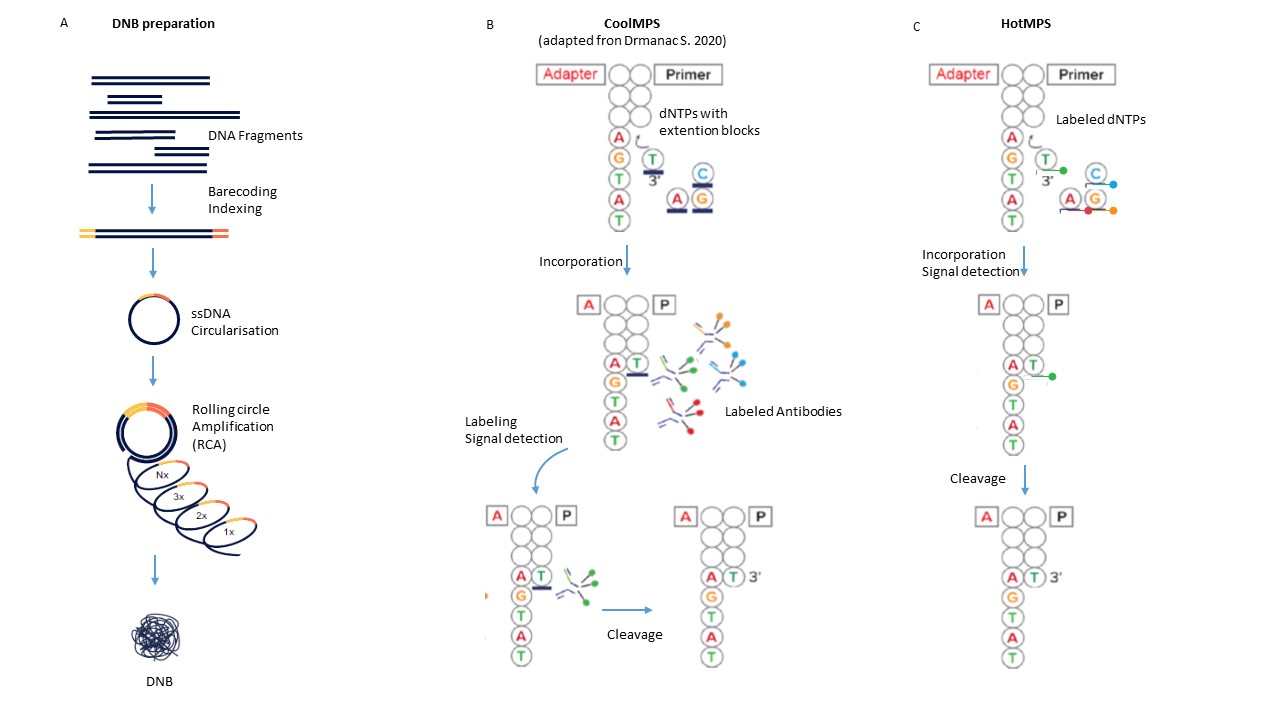
MGI’s DNBseq technology utilizes single-stranded DNA Nanoballs (DNBs). Single-stranded, indexed DNA or cDNA fragments are circularized and amplified via Rolling Circle Replication (RCR), producing compact DNBs containing hundreds of copies per original fragment (Fig. 2A). Because RCR is a linear amplification process, it avoids clonal PCR error propagation, resulting in low duplication rates. The underlying SBS chemistry transitioned from CoolMPS (using fluorescent antibodies against non-labeled blocking groups) (Fig. 2B) to HotMPS (Fig. 2C), which features 3′-blocked fluorescently labeled dNTPs cleaved enzymatically after imaging. Paired-end reading is achieved through Multiple Displacement Amplification (MDA).
Element Biosciences Technology
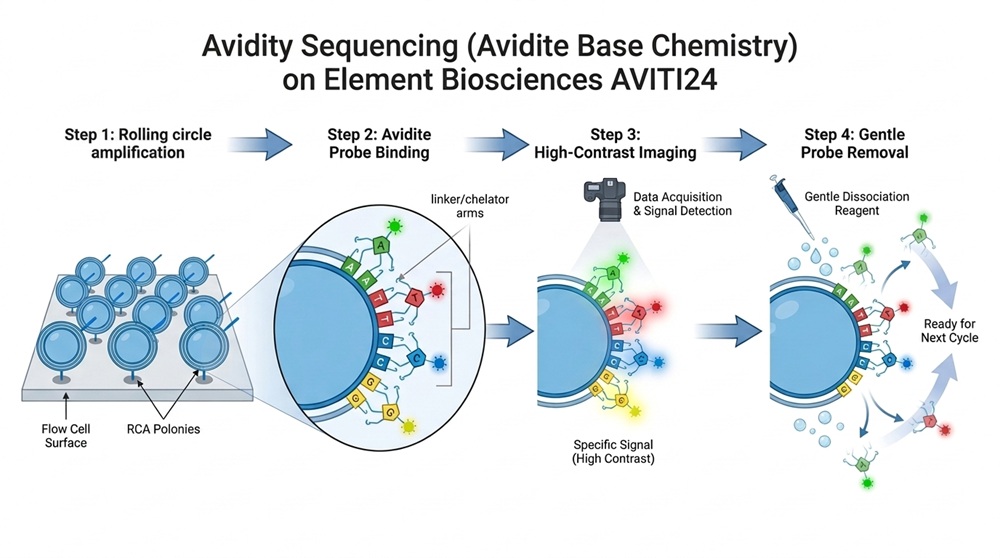
Element Biosciences introduced a major shift with its Avidity Sequencing chemistry (Fig. 3). By decoupling base recognition from nucleotide incorporation—using highly specific, intensely fluorescent molecular complexes called “Avidities”—this approach minimizes reagent usage while achieving superior accuracy (Q40+ quality scores). The AVITI24 platform advances this paradigm by integrating high-throughput imaging into the benchtop sequencer. Beyond standard sequencing, AVITI24 enables simultaneous multi-omic profiling directly within intact cells, combining single-cell RNA sequencing, protein detection, and cell morphology analysis in a unified, automated assay.
Mise à jour Août 2026